

Quick Answer: Vanta, Drata, Scytale, and Secureframe are useful starting points for organizations that need ISO 42001 control mapping, evidence collection, and audit workflows. Credo AI and Holistic AI deserve a closer look when the harder problem is governing a large AI inventory or evaluating AI systems. The best choice depends on your existing compliance stack and who will operate your AI management system. Software supports certification; an independent certification body makes the certification decision.
Your team buys an ISO 42001 platform. The integrations connect, policies appear, and the dashboard starts filling up. Then someone asks who approved the customer-support agent to use production data.
The answer is in a Slack conversation nobody saved. The system owner has changed teams. A policy exists, but nobody can show how the decision was reviewed.
That is the buying problem we help you solve. We compare six platforms by the work they support, the gaps you need to investigate, and the evidence worth requesting before signing.
You will also see when a managed implementation partner is the missing piece.
BEMO partners with both Vanta and Drata. We do not favor either platform; we help clients choose and operate the option that fits their environment.
Key Takeaways
- Start with your operating problem: collecting audit evidence, governing AI use cases, or both. Those needs can require different tools.
- Ask vendors to demonstrate a complete evidence trail, from an AI system and its risk assessment to an approved control and review record.
- Reuse ISO 27001 processes where they apply, but validate the additional AI risks, impacts, and lifecycle decisions.
- Budget separately for software, implementation, internal ownership, and the certification body's work.
- If your team lacks time to run the program, BEMO's AI compliance services combine implementation, platform management, and audit coordination.
Best ISO 42001 Software at a Glance
The shortlist below separates compliance automation from dedicated AI governance. “Best fit” describes a purchasing scenario, not a universal winner.
|
Platform |
Best-fit starting point |
What to verify in the demo |
|
Vanta |
ISO 42001 alongside existing compliance work |
AI decisions, manual tasks, evidence reuse |
|
Drata |
Continuous evidence workflows across frameworks |
Unmonitored controls and approval records |
|
Scytale |
Software plus compliance guidance |
Who performs each implementation task |
|
Secureframe |
A broader compliance program adding ISO 42001 |
Training provision and framework entitlements |
|
Credo AI |
A complex AI inventory and governance process |
Intake-to-approval traceability and exports |
|
Holistic AI |
AI governance with technical evaluations |
Test coverage, remediation, and audit handoff |
What Does ISO 42001 Certification Software Actually Do?
ISO/IEC 42001 sets requirements for establishing, operating, and improving an AI management system, or AIMS. It applies to organizations that develop, provide, or use AI. The subject of certification is the defined management system, not a promise that every model output is accurate or safe.
Software can help you map requirements to controls, assign owners, collect evidence, maintain policies, track risks, and coordinate audit requests. Some platforms also support AI inventories, impact assessments, approvals, and technical evaluations.
Those features matter when they preserve the connection between a decision and its evidence. An uploaded policy without an owner, approval, or review history is a weak substitute for an operating process.
If you are still defining the program, start with our explanation of what ISO 42001 covers and the ISO 42001 requirements overview.
Compliance Automation vs. AI Governance Platforms
Compliance automation platforms organize work across frameworks such as ISO 27001, SOC 2, and ISO 42001. They are a sensible starting point when your main bottleneck is evidence collection or maintaining several audit programs.
Dedicated AI governance platforms focus on AI systems, use cases, vendors, risks, and lifecycle decisions. Some also support technical testing. They become more relevant when the organization cannot reliably identify its AI use or trace how a system was assessed and approved.
The categories overlap. Ask what each product does in the edition you are buying. A framework mapping does not automatically include model testing, and a model-testing feature does not automatically produce a complete certification package.
How We Evaluated the Shortlist
We reviewed current vendor product pages and support documentation against seven buying criteria. Use the same criteria to compare proposals against your own environment:
- Control coverage: ISO 42001 requirements, control ownership, and support for documenting the Statement of Applicability.
- Evidence automation: what the product collects, how often, and what still needs a person to create or approve it.
- Integrations: the systems you actually use, including the permissions and data each connection requires.
- Cross-framework reuse: whether one evidence item can support relevant requirements without hiding differences in scope.
- AI governance: inventory, risk and impact assessments, approvals, and any technical evaluations included.
- Commercial clarity: framework add-ons, onboarding, services, renewal terms, and export costs.
- Audit handoff: whether an auditor can follow the evidence and obtain usable exports.
Our recommendations reflect documented capabilities and buyer fit. Your demo should establish whether those capabilities work for your systems and team.
The Best ISO 42001 Certification Software Options
1. Vanta: For Teams Adding AI Compliance to an Existing Audit Program
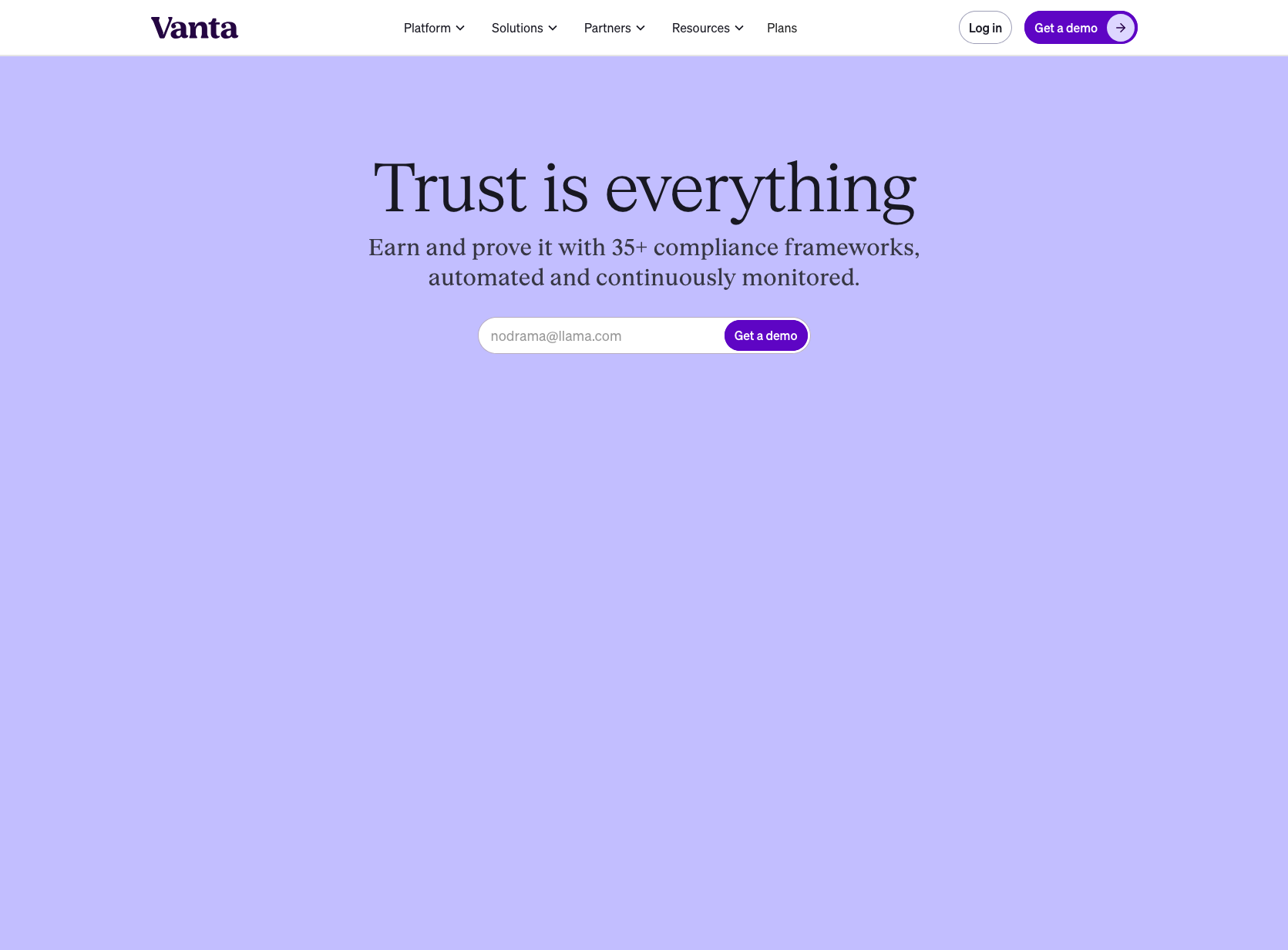
Best fit: A team that wants ISO 42001 evidence and workflows alongside its broader security compliance program.
Vanta supports ISO 42001 control mapping, evidence collection, policy workflows, and risk management. Its platform approach is useful when your team already maintains another framework and wants to reuse appropriate controls and evidence.
The buying question is how much of your AI program becomes a repeatable workflow. Have the vendor demonstrate an AI use case, its assigned owner, a risk decision, and the evidence required for the next review. Check how a changed use case triggers reassessment.
Watch for: A strong integration catalog is useful only where the integrations collect evidence relevant to your scope. Ask which ISO 42001 tasks remain manual and who will complete them. Policy-drafting assistance still needs your organization's review and approval.
Demo test: Bring one existing ISO 27001 evidence item and one AI impact assessment. Ask how both become part of an audit trail without treating them as interchangeable.
Pricing: Request an itemized quote covering ISO 42001, onboarding, and any additional frameworks or services.
Partnership: BEMO partners with Vanta and Drata, with no preference between them.
2. Drata: For Teams That Want Evidence Monitoring Across Frameworks
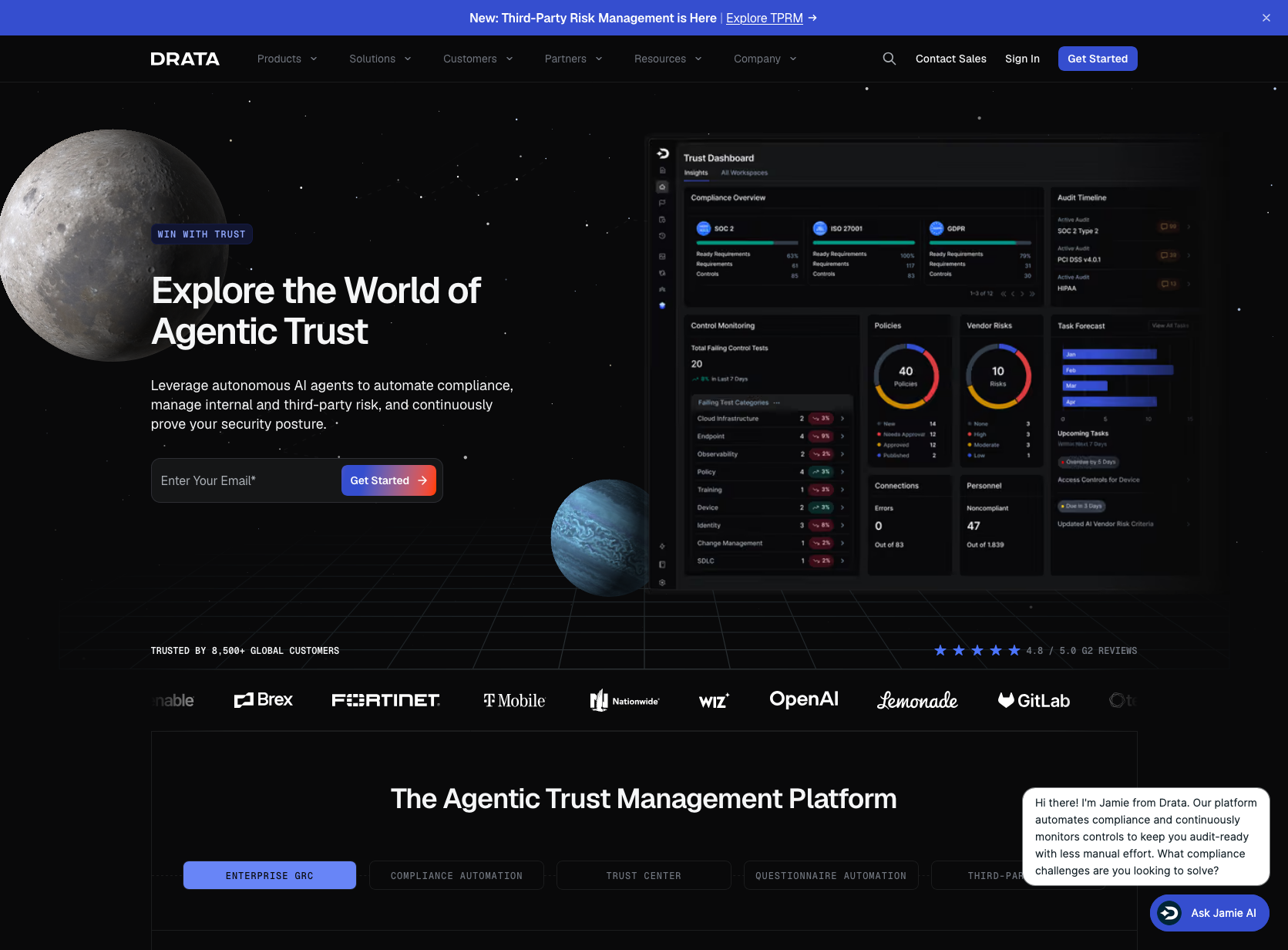
Best fit: An organization extending a continuous compliance program into ISO 42001.
Drata lists ISO 42001 and NIST AI RMF among its supported frameworks. Its monitoring, integrations, and mapped controls can help teams maintain evidence across programs.
One useful detail appears in Drata's own support documentation: it provides examples of evidence for ISO 42001 controls that are not monitored automatically. That is a better purchasing conversation than asking whether the platform “automates compliance.” You need to know where automation ends and assigned work begins.
Watch for: A passed technical check does not demonstrate that management reviewed an AI impact assessment or accepted a residual risk. Confirm the workflow for documenting those decisions and the review evidence an auditor can access.
Demo test: Pick an unmonitored control. Ask the vendor to show the requested evidence, owner, due date, approval history, and auditor handoff.
Pricing: Ask for the framework scope, implementation assistance, support level, and renewal terms in writing.
Partnership: BEMO partners with Drata and Vanta, with no preference between them.
3. Scytale: For Teams That Want Software With Compliance Guidance
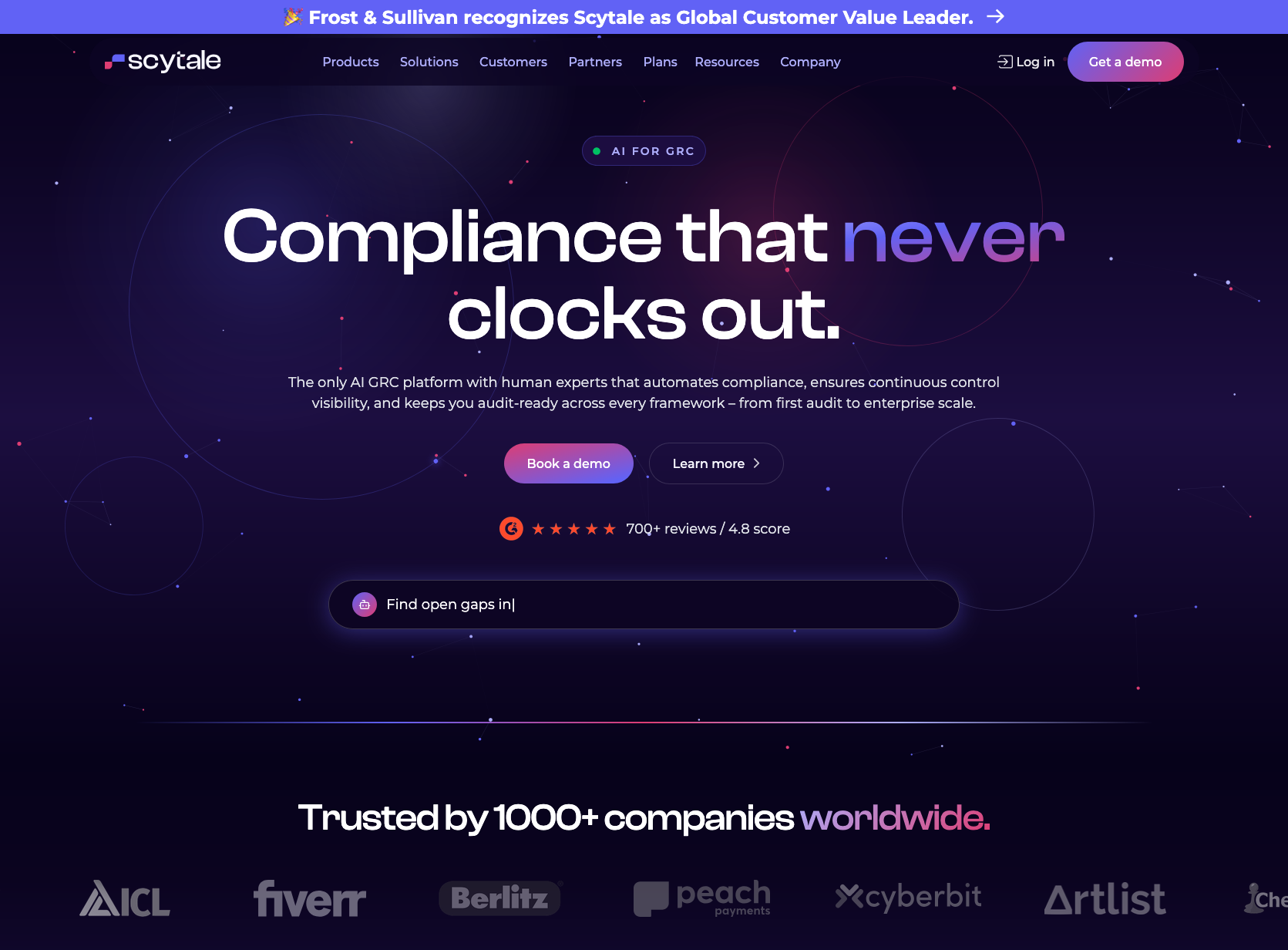
Best fit: A lean team that needs help interpreting the work as well as tracking it.
Scytale combines compliance software with dedicated compliance support. Its ISO 42001 offering includes mapped controls, evidence workflows, policy templates, and guidance on building an AIMS.
That combination is worth examining when your compliance owner is also running IT, security, or operations. The useful comparison is the scope of the people doing the work, alongside the software features.
Watch for: “Expert support” can mean different things in a contract. Establish who drafts assessments, customizes policies, follows up with control owners, and prepares audit evidence. Keep the independent certification body's role separate.
Demo test: Bring a gap that requires both a document and an operational change. Ask which tasks Scytale's team performs, which it advises on, and which remain yours.
Pricing: Request separate clarity on platform access, included expert time, implementation deliverables, and auditor fees.
4. Secureframe: For Teams Extending a Multi-Framework Compliance Workflow
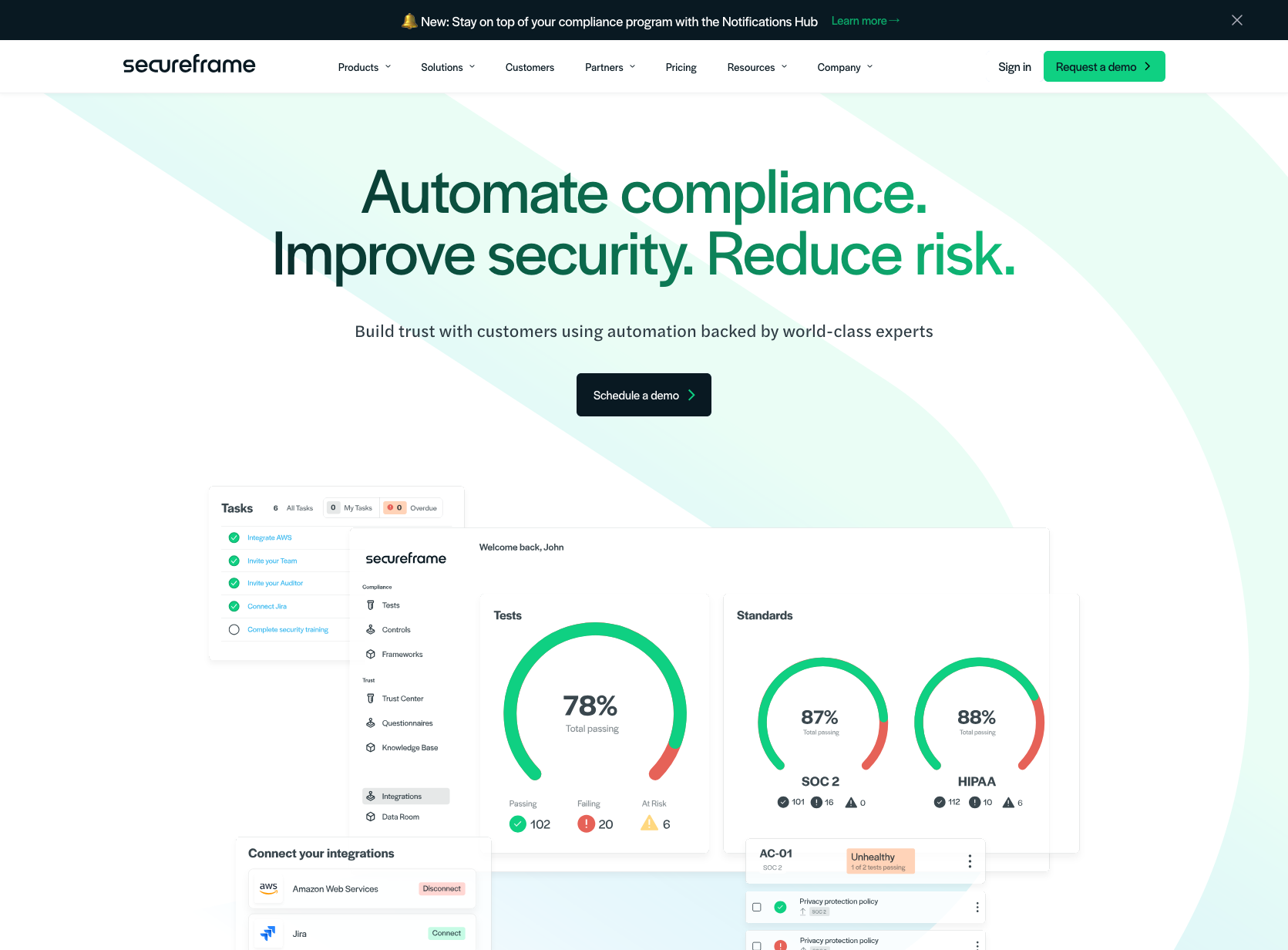
Best fit: A team that wants ISO 42001 controls and evidence inside a broader compliance platform.
Secureframe supports ISO 42001 and provides framework mappings, evidence workflows, and AI policy templates. That makes it a candidate for organizations that want to coordinate AI governance with an existing compliance program.
A specific limitation is worth discussing before purchase: Secureframe's support guidance says it does not currently include an AI training module or ISO 42001 training template. Customers need to develop or source suitable training and retain the evidence.
Watch for: Included policies and mapped tests do not necessarily include every operational resource your program needs. Build a short list of external training, implementation, and assessment support to price alongside the license.
Demo test: Ask the vendor to show how externally delivered AI training evidence is attached, reviewed, and kept current. Then inspect how a shared control maps across your frameworks.
Pricing: Confirm ISO 42001 entitlement, framework add-ons, onboarding, and any partner services in the proposal.
5. Credo AI: For Organizations Governing a Complex AI Portfolio
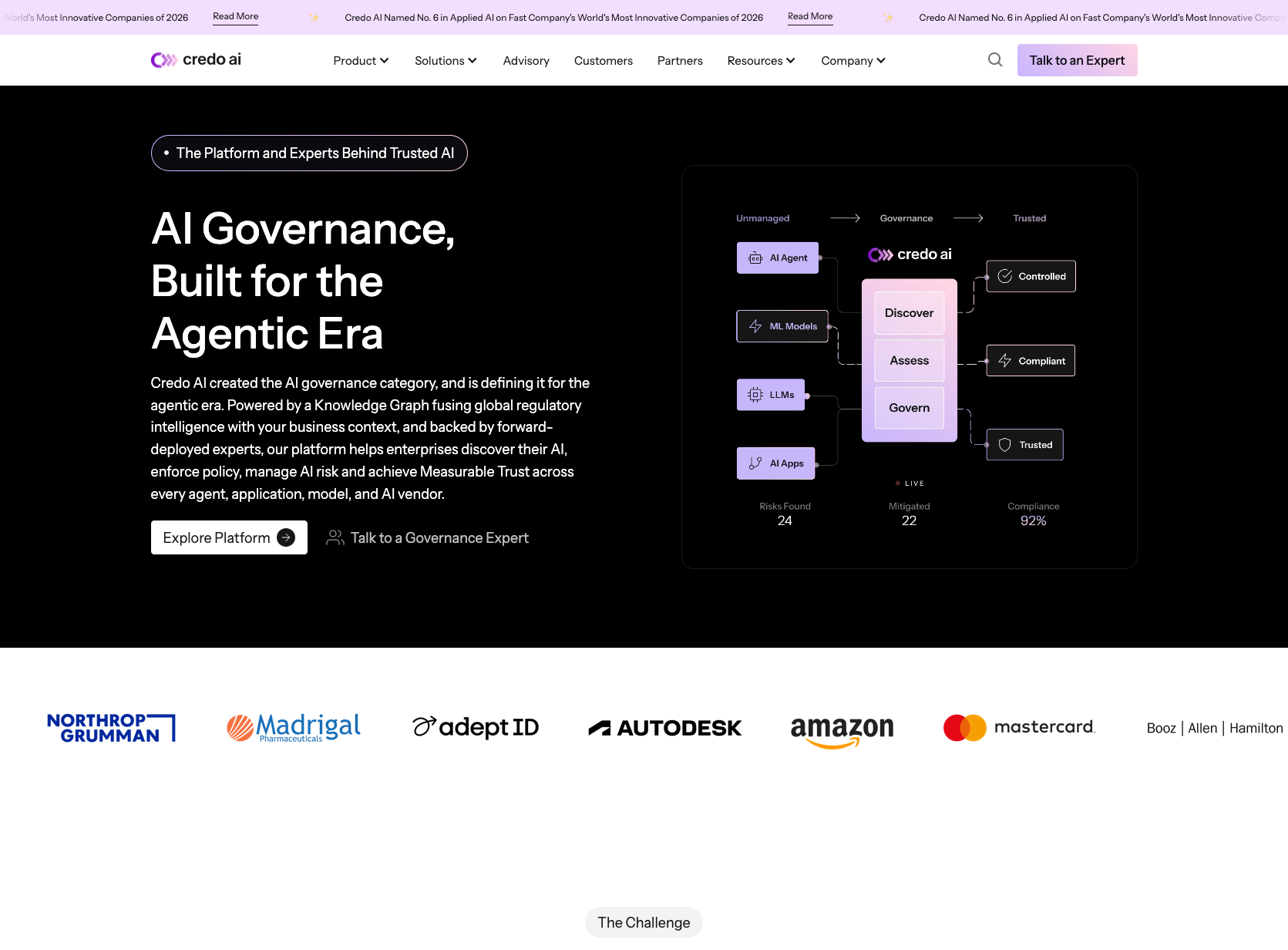
Best fit: An organization that needs a clearer inventory and governance process across AI applications, vendors, and agents.
Credo AI emphasizes AI inventory, risk assessments, policy mappings, and governance workflows. Its policy packs include ISO 42001 and NIST AI RMF, helping teams connect AI-specific governance work to broader requirements.
This is a different starting point from buying a platform primarily to collect security evidence. It is relevant when the hard question is which AI systems exist, what risks they introduce, and who can approve them.
Watch for: A governance workflow is only useful if teams supply the necessary context and keep it current. Confirm how records are discovered or entered, how owners validate them, and how evidence reaches your audit process.
Demo test: Follow one third-party AI application from intake through risk assessment, approval, change review, and evidence export. Ask which integrations are generally available in your proposed package.
Pricing: Request a quote tied to your AI inventory, intended workflows, integrations, and implementation support.
6. Holistic AI: For Teams That Need Governance and Technical AI Evaluation
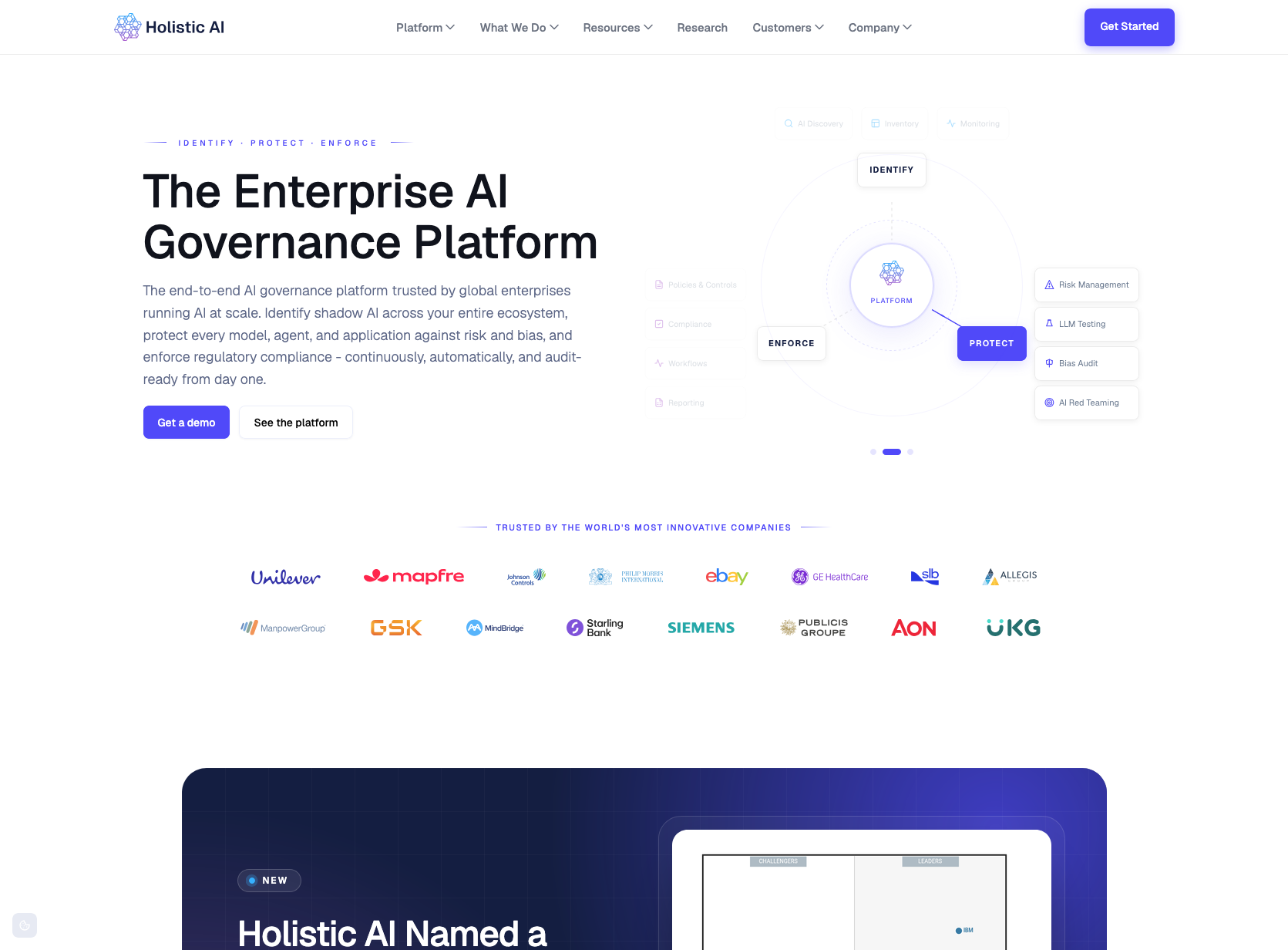
Best fit: An organization that needs to connect AI governance with evaluation of its AI systems.
Holistic AI combines inventory and governance workflows with capabilities such as AI testing and red teaming. Its platform describes evaluations covering areas including bias, robustness, efficacy, and privacy.
That technical focus can be useful when the team needs evidence about system behavior as well as records showing that governance processes occurred. The two evidence types answer different questions and should remain distinguishable.
Watch for: Testing coverage depends on the system, available access, data, and evaluation method. Ask the vendor to demonstrate a relevant test on a comparable system and explain its limits. A favorable test result does not guarantee safe behavior in every context.
Demo test: Trace a technical finding into a risk decision, an assigned remediation action, and a documented retest. Confirm how those records support your AIMS audit.
Pricing: Scope the governance modules, evaluations, system coverage, and services you need before comparing quotes.
What Software Will Not Decide for You
Tools can suggest scope, draft policies, organize assessments, and flag missing evidence. Your organization still needs accountable people to approve decisions and implement the resulting controls.
Start by naming owners for five pieces of work:
- Scope: Leadership approves which organizational activities and AI systems the AIMS covers.
- Risk and impact: System owners and relevant specialists assess effects on people and the organization, then document treatment and acceptance decisions.
- Implementation: Technical and business teams make the changes described in policies and plans.
- Review: Management evaluates performance, exceptions, incidents, and changes rather than simply accepting a dashboard score.
- Corrective action: An assigned owner resolves findings and records whether the correction worked.
Consider a support agent that begins retrieving a new category of customer data. A connector may show that access controls exist. Someone still needs to assess the changed use, approve access, update documentation, and determine whether earlier evaluations remain applicable.
Software is valuable when it makes that sequence easier to operate and prove.
Software, Implementation Partner, and Certification Body: Who Does What?
The software provider supplies the platform. Your team or implementation partner configures it, builds the management system, and maintains the underlying processes. The independent certification body assesses the AIMS and decides whether to issue certification.
Keep those responsibilities visible in proposals. A platform can introduce auditors, and a managed provider can coordinate the audit, but neither service should be confused with the certification decision.
Ask who owns the workspace, policies, risk register, and evidence exports after the engagement ends. Also clarify who closes findings and who pays for additional audit work. These questions matter more than a generic promise of being “audit-ready.”
How to Choose the Right ISO 42001 Platform
Start with your current stack. If an existing compliance platform supports ISO 42001, test that option before introducing another evidence repository. A second tool needs to solve a problem the first cannot handle adequately.
Next, run a pilot around one real AI use case. Use a sanitized example if the vendor environment is not approved for sensitive information. Require the demonstration to produce:
- An AI system record with purpose, owner, relevant data, and dependencies.
- A risk and impact assessment with review and approval records.
- A selected control, implementation evidence, and an explanation of its relevance.
- A change that creates a follow-up review or action for the responsible person.
- An export another reviewer can understand without a guided sales demo.
Check the export before signing. Confirm whether attachments, timestamps, approvals, control mappings, and history remain usable when you leave the platform.
Reuse ISO 27001 Work Without Assuming Equivalence
An established information security management system can provide useful processes for document control, training records, internal audit, management review, and corrective action.
The AI-specific work still needs attention. Your AI inventory, impact assessment, data considerations, supplier dependencies, and lifecycle decisions must reflect the AIMS scope. Our ISO 42001 and ISO 27001 overlap guide explains where to reuse work and where to extend it.
Compare the Full Cost of Operating the Program
A useful budget is software plus implementation plus internal effort plus certification and ongoing maintenance. Ask vendors to separate these items so a low license price does not hide substantial unassigned work.
Request the same scope from every vendor: frameworks, users, AI systems, integrations, onboarding, services, exports, and renewal terms. Compare the cost of the operating program you need, not differently sized packages.
Is ISO 42001 Software Worth It?
Software is easier to justify when several people maintain evidence, multiple frameworks share controls, or reviews and approvals are difficult to trace. A small, well-owned program may be able to begin with simpler document and task management, provided it can reliably operate and demonstrate the required processes.
One Reddit discussion linked to this topic questions the value of an ISO 42001 qualification. It is primarily a discussion about an individual's auditor training and career prospects, not evidence that organizational certification or compliance software lacks value.
For your organization, use a more practical test: identify the customer requirement or governance problem, the work the platform will remove, and the owner who will maintain it. If those answers are unclear, clarify the program before buying another subscription.
ISO 42001 vs. NIST AI RMF
ISO 42001 provides requirements for a certifiable AI management system. NIST AI RMF is voluntary guidance for managing AI risks through its Govern, Map, Measure, and Manage functions.
A platform may support both, and their work can inform one another. A mapping between them does not make them interchangeable or create a NIST-issued certification. See our ISO 42001 vs. NIST AI RMF comparison for the practical differences.
When a Managed Partner Makes More Sense
If your team knows which platform it wants but lacks time to build and maintain the program, the missing resource is implementation capacity.
BEMO's AI compliance service combines a dedicated compliance engineer and virtual CISO with program implementation, platform management, training, and auditor coordination. We help define scope, develop the required documentation, and maintain the work beyond the initial audit.
Our published ISO 42001 roadmap describes concrete implementation tasks: AI discovery, repeatable risk and impact assessments, control selection, and a Statement of Applicability. It also connects the management system to technical work such as Microsoft Purview policies, conditional access, log retention, and scheduled evaluations where applicable.
Our four-stage AI maturity approach connects shadow AI discovery, secure Copilot adoption, AI agent security, and formal AI compliance. In BEMO's Trust Issues discussion of this approach, agent governance includes assigned identities, defined permissions, and recurring change reviews. Those are operating decisions that an evidence platform needs to capture, not replace. The AI Agent Security stage also includes an AI Control Board governance framework and lifecycle management.
In the Trust Issues episode “Your AI Passed the Audit. Should You Trust It?”, Bruno Lecoq, Jeremy Patterson, and Arvita Tripati discuss accountability and the need to reevaluate AI governance as systems and workflows change. That is the work a managed program must sustain after an audit.
The engagement needs a clear division of responsibility. We can build and operate the program with you; your leadership remains responsible for organizational decisions, and the certification body retains its independent assessment role.
Confirm a scoped implementation plan and a separate schedule for external Stage 1 and Stage 2 assessments. Software onboarding is one milestone; operating the AIMS and obtaining the certification body's decision require additional work. Our ISO 42001 certification roadmap explains the stages.
Frequently Asked Questions
Can Software Get My Company ISO 42001 Certified?
Software can support the evidence, controls, and workflows needed for certification. It cannot issue the certificate. An independent certification body evaluates your AIMS, while your organization remains responsible for implementing and operating it.
Do We Still Need an Implementation Partner or Auditor?
You need a certification body if you want certification. An implementation partner is optional: use one when your team needs expertise or capacity to build and maintain the program. Confirm the scope and independence of each party's work.
Is Vanta or Drata Better for ISO 42001?
Both support ISO 42001. The better choice depends on your existing workflows, integrations, evidence requirements, support needs, and commercial proposal. BEMO partners with both and has no preference. Run the same real-use-case demo in each before deciding.
Can We Reuse Our ISO 27001 Evidence?
Often, where the evidence genuinely supports a relevant requirement and remains valid for the AIMS scope. Reuse does not remove the need for AI-specific risk and impact assessments or documented lifecycle decisions. Validate mappings instead of accepting them automatically.
How Much Does ISO 42001 Software Cost?
There is no reliable single price for this shortlist. Request current quotes for the exact frameworks, functionality, scale, and services you need. Keep implementation, certification-body fees, internal effort, and ongoing maintenance visible alongside the license cost.
Get ISO 42001 Certified With BEMO
Choose the platform your team can operate and your auditor can follow. Before committing, ask it to demonstrate one complete decision: the AI use case, the risk, the approval, the control, and the evidence that the control works.
If the demo reveals that nobody has time to own the work between those steps, address that gap now. Talk with BEMO about a managed ISO 42001 program that connects your software to a functioning AIMS and a clear certification plan.
We've got more resources for you to become a cyber-pro.

Leave us a comment!