

Quick Answer: BEMO is our first pick for Microsoft-based organizations seeking managed ISO 42001 readiness and ongoing AI governance. Accorian fits advisory-led programs, while Thoropass combines software with audit coordination. You also need an independent certification body to assess your AI management system and issue the certificate.
An ISO 42001 proposal can include audit support and still leave your team with most of the work.
Someone has to identify the AI tools people use, assess their risks and impacts, put controls in place, and keep the evidence current. If those responsibilities fall between your consultant, software vendor, and IT team, buying help can leave you managing another project.
That is what makes choosing a provider difficult. A policy template will not resolve a Copilot permissions issue. An audit booking will not tell you who should approve a new AI use case. You need to know who will do the work before you compare the price.
Here we compare the best ISO 42001 certification providers by the support they deliver: readiness, implementation, independent assessment, and ongoing monitoring. You will see which firms fit each need, what affects the timeline, and what to ask before signing. For Microsoft-based teams that need someone to manage the program, we explain where BEMO fits.
Key Takeaways
- A readiness partner builds and supports your AI management system. An accredited certification body independently assesses it.
- A green compliance dashboard does not prove your AI inventory, impact assessments, or approvals are complete.
- Compare implementation milestones separately from audit dates, and assign owners for the work after certification.
- Discuss your ISO 42001 readiness with BEMO if you need an ongoing delivery team.
Best ISO 42001 Providers at a Glance
Shortlist a provider by the responsibility you want it to take. These three options address readiness and coordination; the separate certification-body section covers independent assessment.
|
Provider |
Best Fit |
Confirm Before Signing |
|
BEMO |
Microsoft environments needing managed AI governance |
Technical remediation, platform choice, and ongoing responsibilities |
|
Accorian |
Teams seeking AI governance and security advisory |
Implementation ownership and recurring support |
|
Thoropass |
Teams wanting software and audit coordination together |
Certifying legal entity, accreditation, and independence arrangements |
Our AI compliance services cover readiness and continuing support. If you already have a functioning program, you may need only targeted advice or a certification audit.
Certification Body vs. Readiness Provider
An accredited certification body evaluates your artificial intelligence management system (AIMS) and makes the certification decision. A readiness provider helps design, implement, and maintain that system. A software platform organizes the work and evidence.
BEMO is a readiness and managed-compliance partner. We do not issue ISO 42001 certificates. The ISO 42001 overview explains what the management system covers.
Independence is more precise than saying a company cannot offer any preparation and audit services. Certification bodies may explain requirements or assess readiness, but they cannot provide management-system consultancy. IAS guidance on ISO/IEC 17021-1 sets out those impartiality restrictions.
For a bundled offer, ask who designs the AIMS, who conducts the audit, and which legal entity signs the certificate. Separate teams alone are not evidence that every accreditation requirement is satisfied.
Also distinguish an organization’s certificate from an individual’s lead-auditor qualification. Training credentials can support a consultant’s competence, but they do not authorize that consultant to certify your organization.
What ISO 42001 Covers
ISO/IEC 42001:2023 establishes requirements for creating, operating, and continually improving an AIMS. ISO describes it as the first AI management system standard, applicable to organizations developing, providing, or using AI.
That includes businesses deploying third-party AI. You do not need to train a model yourself for AI governance to matter. Your responsibilities depend on what the system does, who it affects, and your role.
For a buyer, the immediate question is practical: can you explain your AI use and show how decisions are controlled? Our ISO 42001 requirements guide covers the management-system requirements in more detail.
Jeremy Patterson raises that ownership question in his LinkedIn post on AI governance. Use it internally to start a discussion about who approves new AI use cases.
How We Evaluated These Providers
We reviewed published service descriptions, supporting documentation, and accreditation information. Sources reviewed: Sep 23, 2026
The shortlist prioritizes six buyer questions:
- Advisory depth: Does support cover AI-specific risks and impacts, rather than policy templates alone?
- Technical ownership: Who changes permissions, configures controls, and closes identified gaps?
- Platform flexibility: Can the engagement work with your chosen tools, and what is platform-specific?
- Managed monitoring: What work continues after the certificate is issued?
- Existing programs: Can you reuse suitable security and governance processes without missing AI-specific requirements?
- Organizational fit: Does the delivery model match your environment and available staff?
Use the criteria above to match each provider to the work you need covered. BEMO is our first pick for managed delivery in Microsoft environments; Accorian and Thoropass suit different needs, as the profiles below explain.
The Best ISO 42001 Readiness and Managed-Compliance Providers
Use these profiles to decide which conversations to have. Ask each candidate to put its responsibilities, exclusions, and ongoing support in writing.
1. BEMO for Microsoft-Native, Managed AI Governance
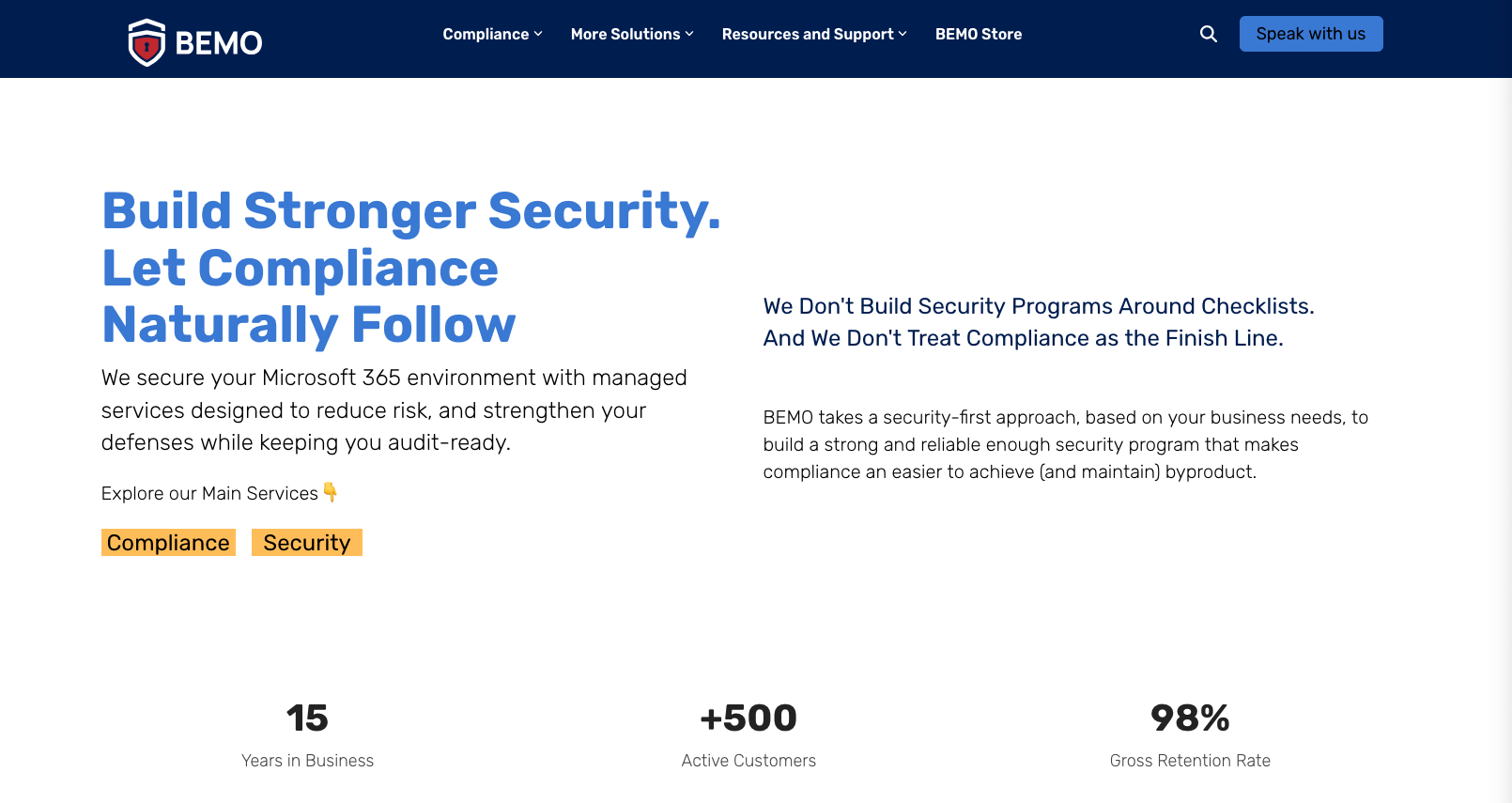
At BEMO, our ISO 42001 engagement includes gap assessment, AI inventory and scope, risk treatment, policy documentation, training, and auditor coordination. Continuing support includes supplier reviews, compliance maintenance, and quarterly CISO reviews.
The operational fit matters when the same organization needs governance advice and changes to its Microsoft environment. Ask us to define which remediation tasks sit inside your engagement and which require another team.
BEMO partners with both Vanta and Drata, with no preference for either. Our ISO 42001 service page describes delivery through Drata; the proposal should specify the platform and support included in your engagement.
Best fit: Microsoft-based organizations that need an ongoing team to run readiness and governance work.
Trade-off: A fully managed engagement may exceed your needs if internal teams already operate the AIMS. Headcount-based pricing still requires a scoped proposal; confirm software, assessment, and technical-service inclusions.
2. Accorian for AI Governance and Security Advisory
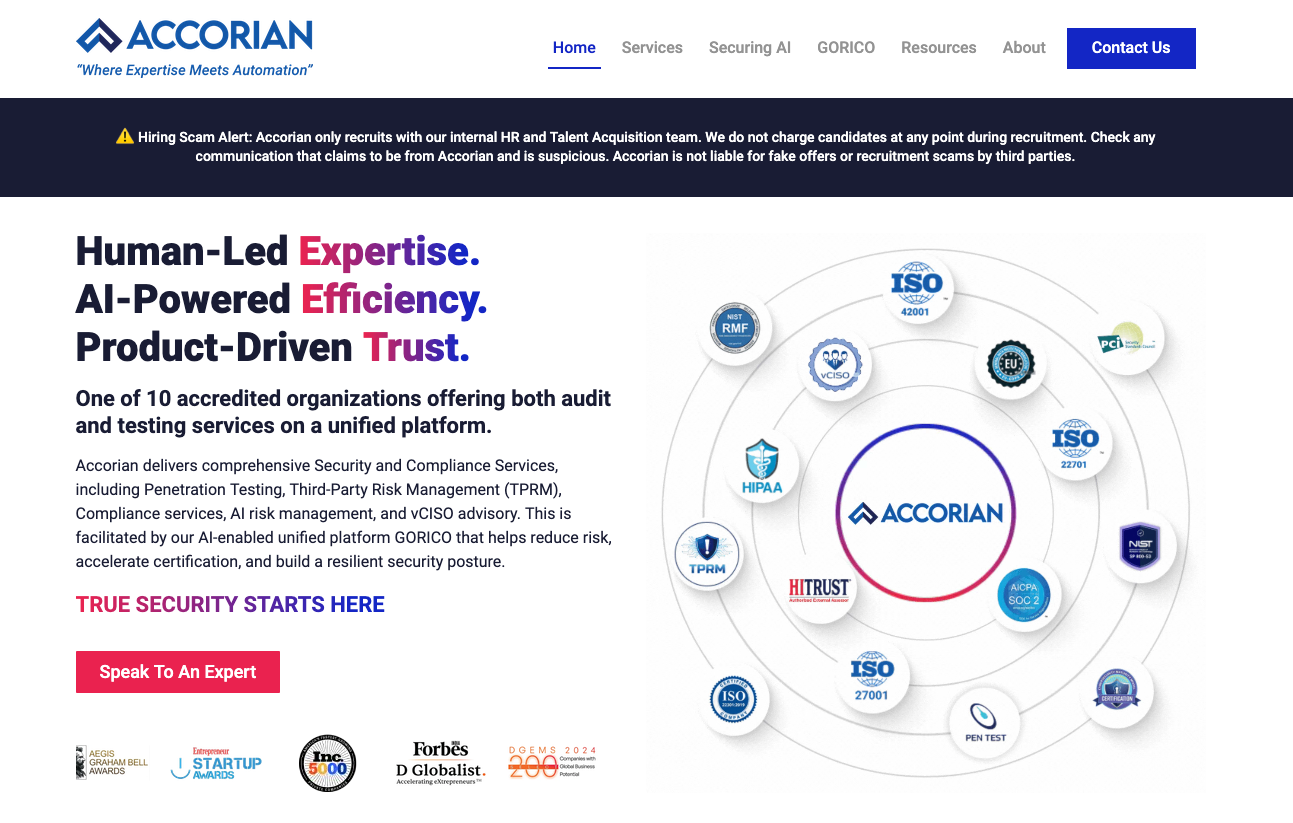
Accorian’s published AI governance advisory services describe support for AIMS scope, risk assessments, AI impact assessments, policies, implementation, and certification preparation. It also presents AI security expertise and its GORICO governance platform as part of its approach.
That makes Accorian worth considering when your main gap is specialist advice across governance and technical AI risk. Its service description extends beyond documentation into control implementation and monitoring.
Best fit: Organizations that want consulting support to build an AI governance program alongside existing security work.
Trade-off: Confirm how its platform fits your existing tools and which team performs remediation. Ask what remains under recurring management after the readiness project ends.
3. Thoropass for Software and Audit Coordination
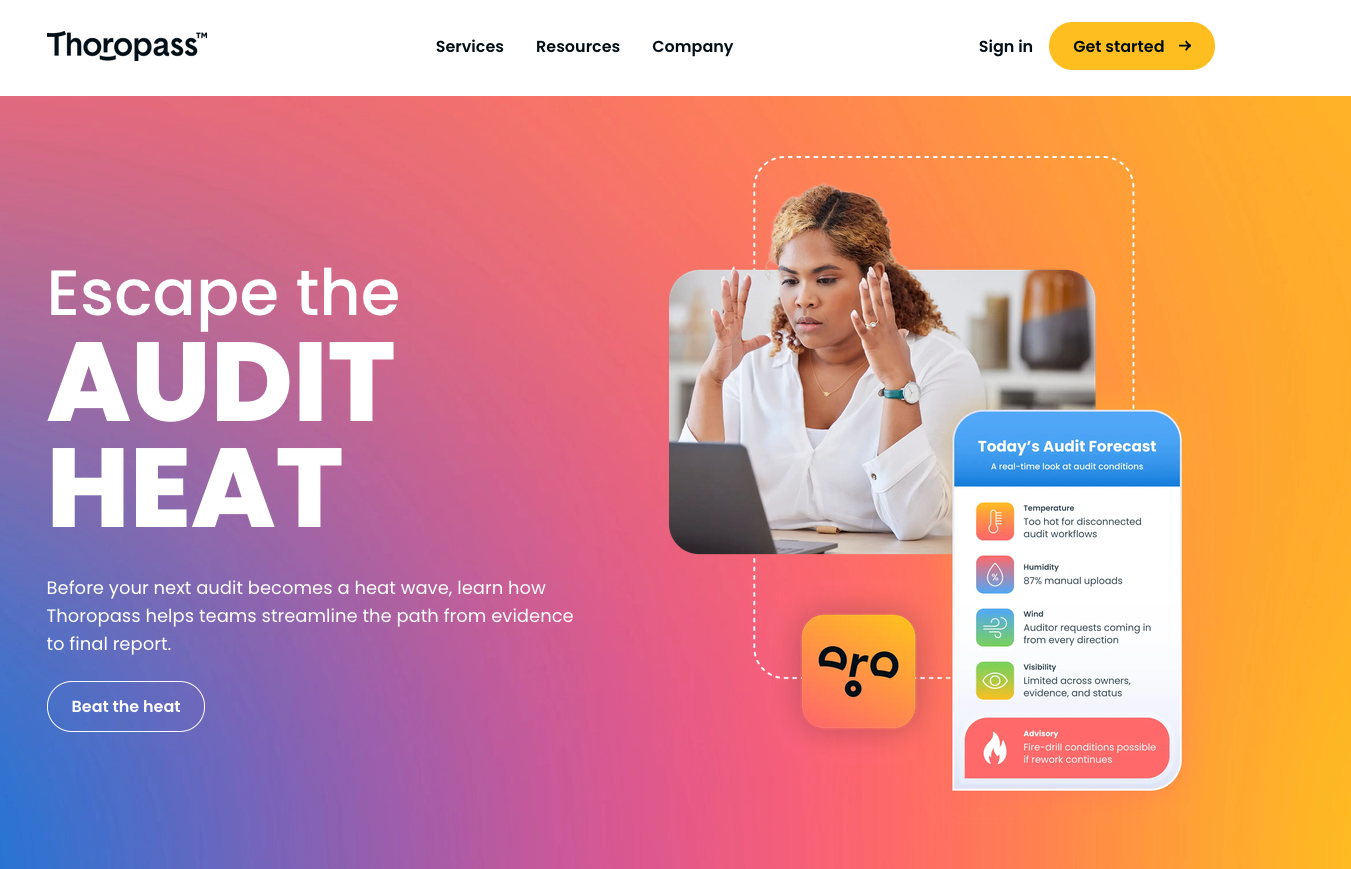
Thoropass’s ISO 42001 offering combines templates, evidence collection, risk tracking, and audit workflows. It suits buyers who want the preparation and assessment process coordinated through one platform.
Thoropass also publishes a certificate for its own AIMS, issued by Mastermind Assurance. Holding a certificate is different from being the body that will issue yours.
Best fit: Teams that can operate their technical environment but want software-supported compliance and audit coordination.
Trade-off: Confirm the certifying entity, its ISO 42001 accreditation, and the consultancy boundary. Ask who implements technical fixes and maintains governance between audits; a coordinated workflow does not answer those questions by itself.
Accredited Certification Bodies to Know
Choose your certification body separately from your readiness delivery model. ANAB’s AIMS accreditation program identifies the standards used to assess certification bodies, including ISO/IEC 42006.
The firms below publish ISO 42001 certification services or accreditation announcements. Before contracting, check the exact legal entity and current accreditation scope with the named accreditation body.
A-LIGN for Certification With Audit-Management Tooling
A-LIGN describes an accredited ISO 42001 certification service, pre-assessments, and its A-SCEND audit platform. Consider it when your AIMS is ready for independent assessment and you want a structured evidence-request workflow.
A pre-assessment can expose gaps. It does not mean the certification body will design your policies, implement controls, or run your Microsoft environment.
Schellman for Organizations Seeking an Assessment Firm
Schellman reports ANAB accreditation for ISO 42001. It belongs on the assessment side of your shortlist, particularly when you are coordinating assurance needs across an established compliance program.
Evaluate the proposed audit team, relevant AI experience, scope, and schedule. A strong assessor still leaves implementation and ongoing management with your organization or readiness partner.
BSI for Buyers Seeking UKAS-Accredited Certification
UKAS announced BSI’s ISO 42001 accreditation in January 2026. BSI is an option to investigate when a customer’s procurement team asks about UKAS-accredited certification or when you already use BSI for another management system.
Ask which legal entity will issue your certificate, whether its current accreditation covers the proposed audit, and how any existing certification work affects scheduling. Your readiness partner still owns the implementation work you assign to it.
DNV for Buyers Comparing Enterprise Certification Experience

DNV reports RvA accreditation for ISO 42001 and names Cognizant as its first customer to achieve accredited certification. That gives buyers a published enterprise certification example to discuss when assessing relevant audit experience.
Ask DNV to explain how it would scope your AI activities, select auditors with relevant experience, and coordinate assessment across your locations. Confirm that the proposed certificate meets your customers’ requirements before committing to the audit.
What a Platform Gives You and What People Still Own
Vanta and Drata support the compliance workflow. Vanta’s ISO 42001 product includes templates, mapped controls, scoping support, and AI assistance. Drata’s ISO 42001 offering centralizes evidence, maps controls, and supports ongoing oversight.
These capabilities can reduce manual work. They do not transfer your organization’s authority to approve use cases, accept risk, or confirm an assessment reflects real operations.
|
Workstream |
Platform Support |
Accountable Human Work |
|
Scope |
Record systems and configure coverage |
Identify actual AI use and approve boundaries |
|
Impact assessment |
Templates, records, and drafting support |
Assess affected people, validate assumptions, and approve findings |
|
Controls |
Mapping, tests, and evidence collection |
Implement controls and resolve failures |
|
Ongoing oversight |
Alerts and scheduled tasks |
Investigate changes, make decisions, and record action |
A green readiness score is not audit readiness. For example, an approved AI policy can appear complete while an unregistered recruiting tool sits outside the inventory. The dashboard cannot represent work you never brought into scope.
Before booking the audit, trace one real AI use case from inventory to impact assessment, approval, operating evidence, and review. Check whether the records describe the same system and current use.
Jeremy Patterson’s post on ISO 42001 readiness addresses this gap between a readiness indicator and a working governance program.
The Microsoft Configuration Test
Microsoft states that Copilot operates within existing permissions. If access to a SharePoint library is too broad, those permissions remain a governance problem when Copilot is introduced.
Ask a candidate to explain how it would handle a sensitive library available to an unnecessarily broad group. The answer should cover ownership, access correction, testing, and evidence of the change.
Then ask how Microsoft Purview protections and monitoring fit your licensing and use cases. A policy about responsible AI use needs corresponding configuration and a person authorized to maintain it.
How Long Does ISO 42001 Certification Take?
Plan in months, with separate dates for implementation, audit readiness, and certification. BEMO’s ISO 42001 service page currently gives approximately eight months for initial implementation. Certification timing also depends on Stage 1 and Stage 2 scheduling.
Existing management systems can shorten preparation. In its account of its own certification, Thoropass reports about five months: three for preparation, one for internal audit, and one for external certification.
Thoropass already had other certifications and established controls. That is a reported example, not a delivery promise or a minimum period imposed by ISO.
Ask your provider to plan around four milestones:
- Scope agreed: AI systems, organizational roles, boundaries, and accountable owners are identified.
- AIMS operating: Approved policies, risk treatment, impact assessments, and evidence processes are in use.
- Readiness demonstrated: Internal audit, management review, and corrective actions support proceeding to certification.
- External assessment completed: Stage 1, Stage 2, and required finding closure lead to the certification decision.
An existing ISO 27001 program can contribute document control, internal audit, and management-review processes. ISO 42001 still requires attention to AI-specific impacts and governance. It is a separate management system standard, not simply a security add-on.
Use our ISO 42001 certification roadmap to discuss dependencies before agreeing an audit date.
How to Choose an ISO 42001 Provider
Ask every shortlisted provider to work through the same use case. A newly approved AI assistant gains access to customer information, then its supplier changes a feature. Who decides whether the original assessment still holds?
A useful proposal names the decision owner, technical operator, review trigger, and evidence to retain. That makes proposals easier to compare than broad promises of audit support.
- Ask for an anonymized deliverable: an AI inventory, impact assessment, or risk-treatment plan relevant to your role.
- Separate advice from implementation: identify who writes policies, changes configurations, and confirms fixes.
- Define independence: name the certification body and document the boundary between consulting and assessment.
- Reuse suitable work: ask how existing ISO 27001 evidence will be assessed for relevance.
- Agree ongoing support: define monitoring coverage, review frequency, escalation, and corrective-action ownership.
- Protect your records: confirm access to policies, assessments, evidence, and system history if the contract ends.
Our ISO 42001 and ISO 27001 comparison can help you identify reusable processes without assuming equivalent certification.
What Does ISO 42001 Certification Cost?
Request an itemized first-year total: readiness services + software + technical remediation + certification audits + ongoing management. Compare proposals against the same scope and ask whether surveillance and recertification are separately quoted.
- Readiness: Include the inventory, risk and impact assessments, policy work, internal audit, and management-review support. Confirm who supplies each deliverable.
- Software and remediation: Separate licensing and setup from the work needed to correct access, configuration, or evidence gaps.
- Certification: Ask the independent certification body to specify Stage 1 and Stage 2 fees, audit days, travel if applicable, and any additional finding-review charges.
- Ongoing management: Price recurring reviews, new AI use cases, supplier changes, evidence maintenance, and surveillance preparation. Record the hours your internal owners must contribute.
Headcount is one pricing input. AI systems, organizational boundaries, supplier dependencies, and internal capacity also affect effort. A low subscription price can still leave substantial implementation work with your team.
When Internal Delivery Is a Better Fit
An internal team may be sufficient if it has AI governance expertise, technical authority, and protected time. You can purchase software and independent certification without outsourcing the entire program.
Internal delivery becomes difficult when the same person must write assessments, chase approvals, resolve access problems, and manage an audit alongside another full-time role. Identify that capacity gap before buying another tool.
ISO 42001 or the NIST AI RMF?
ISO 42001 provides requirements for an AI management system that can undergo third-party certification. The NIST AI Risk Management Framework is voluntary guidance for managing AI risks.
Choose according to the requested outcome. A customer asking for an ISO 42001 certificate needs evidence of that certification. A team building its risk practices may use NIST guidance alongside the AIMS.
The approaches can work together. Our ISO 42001 vs. NIST AI RMF guide explains the distinction. Ask providers which deliverables satisfy your business requirement.
Managed ISO 42001 Monitoring After Certification
Managed service providers supporting ISO 42001 monitoring should maintain both the technical evidence and the governance process. Ask what they monitor automatically, what people review, and what changes trigger reassessment.
Compliance monitoring and AI performance monitoring are different services. A current access review does not show that a model remains accurate or appropriate for its use. Confirm whether testing for quality, bias, drift, or misuse is included.
Use this ownership checklist when reviewing a managed-service proposal. It is a procurement aid, not a universal schedule prescribed by ISO.
|
Trigger |
Expected Work |
Evidence to Retain |
|
New AI tool or use case |
Review scope, supplier, risks, and impacts before approval |
Updated inventory, assessment, and approval |
|
Model, data, or permission change |
Reassess affected controls and authorize the change |
Change record, testing, and access review |
|
Alert or incident |
Triage, contain, investigate, and escalate |
Incident record and corrective action |
|
Scheduled governance review |
Review performance, exceptions, and open risks |
Decisions, assigned owners, and due dates |
|
Surveillance audit |
Prepare evidence and address findings |
Audit records and verified corrective actions |
Give each row an accountable owner and response commitment. A report delivered every month is useful only if someone acts on what it finds.
BEMO’s Four-Phase AI Maturity Model
Our managed AI approach connects four stages: shadow AI, secure Copilot, AI agent security, and ISO 42001 readiness. It draws on our own adoption experience, while allowing clients to begin at their current maturity level.
- Shadow AI: Establish visibility into unapproved AI use and define acceptable tools and data handling.
- Secure Copilot: Review permissions and data protection before expanding access to organizational information.
- AI agents: Assign identities, access boundaries, owners, and lifecycle reviews.
- ISO 42001: Formalize the management system and prepare it for independent assessment.
In our published four-phase discussion, we describe an assessment that found 17 AI systems at a customer who believed none were in use. The lesson for scoping is direct: inventory needs evidence, not assumptions.
The same discussion describes monthly agent reviews and reserving deletion rights for humans. These are examples from BEMO’s governance approach, not universal ISO requirements.
Watch the Trust Issues episode on the four-phase AI model for the operational discussion behind this approach.
An AI advisory group can connect security, IT, legal, business owners, and leadership. Its role should include reviewing new uses and deciding who can accept residual risk. Agree its authority alongside the managed provider’s responsibilities.
Is BEMO the Right ISO 42001 Partner for You?
The right ISO 42001 partner should leave you with a working AI management system and clear ownership of the work ahead. Compare proposals on who prepares the assessments, implements controls, responds to changes, and maintains evidence between audits.
If your organization runs on Microsoft and your team needs help across those responsibilities, BEMO is a strong fit. Our AI compliance service combines readiness work, auditor coordination, and continuing governance support. An independent certification body handles the certification decision.
Bring your current AI tools, existing certifications, and customer requirements to the first conversation. We can use those inputs to identify readiness gaps and define the support your team needs before you commit to an audit schedule.
Discuss an ISO 42001 gap assessment with BEMO.
ISO 42001 FAQs
Questions about governance, practical value, and third-party AI use also appear in this ISO 27001 community discussion. For a short companion video, see the ISO 42001 clip from Trust Issues.
Who issues an ISO 42001 certificate?
An independent certification body issues the certificate after assessing your AIMS. For accredited certification, verify its current ISO 42001 accreditation scope. A readiness consultant or software subscription cannot issue it.
Can we use the same company for consulting and certification?
A certification body cannot provide management-system consultancy. For bundled services, confirm the certifying legal entity, accreditation, and impartiality arrangements. Do not assume separate teams alone satisfy the rules.
Do we need ISO 27001 before ISO 42001?
No. ISO 27001 is not a prerequisite. An established security management system can provide reusable processes, but ISO 42001 still requires AI-specific governance, risk assessment, and impact assessment.
Does ISO 42001 apply if we only use third-party AI?
Yes. ISO 42001 applies to organizations that develop, provide, or use AI. Your AIMS scope should reflect your actual responsibilities, including how you select, approve, oversee, and use third-party systems.
Can Vanta or Drata replace a managed provider?
An experienced internal team may use either platform without a managed provider. Software supports controls and evidence; people still approve scope, assess impacts, implement changes, and maintain the program.
What should managed ISO 42001 monitoring include?
Define inventory updates, change reviews, supplier oversight, incident handling, corrective actions, and audit preparation. Separately confirm any model-performance testing. Name owners and response commitments in the contract.
Does a green readiness score guarantee certification?
No. A dashboard reports against configured scope and tests. The certification body evaluates the AIMS and supporting evidence. Missing systems, weak assessments, or ineffective controls can remain behind a passing score.
We've got more resources for you to become a cyber-pro.

Leave us a comment!